
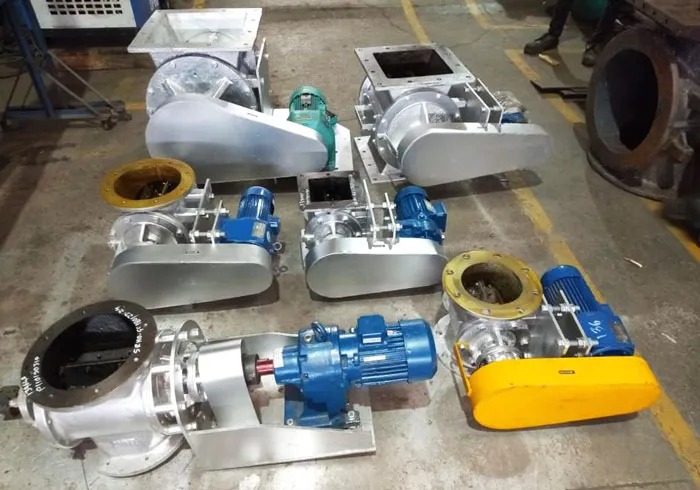
Processing plants depend on steady material movement across connected equipment. Irregular transfer quickly disrupts mixing accuracy and production stability. A properly designed rotary air lock valve allows controlled passage between pressure zones. That steady transfer protects efficiency while preventing unwanted airflow interference.
Consistent Transfer Between Pressure Zones
Industrial processing systems often separate areas with different pressures. Materials must move smoothly without disturbing those pressure differences. Mechanical sealing and rotating chambers make that possible.
The rotating pockets collect measured material portions during operation. Each rotation releases those portions steadily into the next stage. Pressure differences stay balanced because air leakage remains extremely limited. Consistent rotation therefore stabilizes upstream and downstream process conditions.
Rotor Chamber Mechanics Regulating Discharge
Processing lines require predictable movement between storage and equipment. Controlled discharge prevents overflow while protecting downstream machinery performance. Rotor chambers guide particles carefully through each rotation stage.
- Rotor pockets capture measured material during rotation
- Housing clearance minimizes air leakage during transfer
- Shaft seals protect pressure stability within equipment
- Continuous rotation supports consistent feed across systems
These mechanisms maintain steady discharge through controlled chamber movement. Smooth rotation prevents sudden surges that disrupt processing balance. Equipment reliability therefore improves throughout the entire production line.
What Happens When Flow Becomes Uneven?
Irregular discharge quickly disturbs downstream mixing or separation equipment. Sudden surges create pressure disturbances inside sealed processing chambers. Operators then notice reduced efficiency and unpredictable throughput behavior. Controlled feeding eliminates those variations by regulating particle movement.
Balanced transfer stabilizes pressure boundaries between connected machines. Uniform feeding therefore protects product consistency throughout long processing cycles.
Metered Feeding Through Rotational Pocket Design
Accurate feeding depends heavily on rotor pocket engineering details. Each chamber collects particles before rotating toward discharge openings. Precision clearances maintain pressure isolation during continuous operation.
Inside this mechanism, the rotary air lock valve meters bulk solids reliably. Material enters rotor pockets while airflow remains restricted. The sealed housing guides particles without pressure disturbance. Equipment downstream receives uniform quantities every rotation cycle.
- Pocket volume determines consistent metered material release
- Close rotor clearance reduces unwanted airflow intrusion
- Durable housing maintains pressure separation across stages
- Smooth shaft rotation ensures predictable discharge timing
Such metered feeding supports stable plant performance every day. Controlled particle movement protects mixing accuracy and system balance. Engineers therefore depend on this mechanism for reliable throughput.
How Does It Protect Pneumatic Conveying Lines?
Pneumatic conveying systems require steady material injection rates. Sudden feed surges overload pipelines and reduce airflow efficiency. Controlled discharge maintains balanced solid-to-air transport ratios. Conveying lines therefore move particles without clogging or pressure loss.Stable feeding also reduces wear across blowers and pipeline bends. Equipment lifespan increases because airflow conditions remain predictable.
Why Operators Value Reliable Feeding Equipment?
Processing facilities operate continuously with minimal downtime tolerance. Feeding interruptions quickly halt mixing, drying, or packaging operations. Equipment maintaining steady transfer therefore supports uninterrupted production flow. Operators appreciate machines requiring little adjustment during long operating hours.
Gradual Material Movement Supporting Stable Processing
Controlled material movement strengthens overall processing stability across equipment. Gradual feeding reduces turbulence within mixers and separators. Stable transfer also protects delicate powders from unwanted compaction.
Plants therefore maintain predictable throughput across extended operating periods. Engineers design systems expecting steady input rather than irregular bursts. Reliable material control ultimately supports product quality and operational efficiency. Continuous production becomes easier when feeding equipment performs consistently.